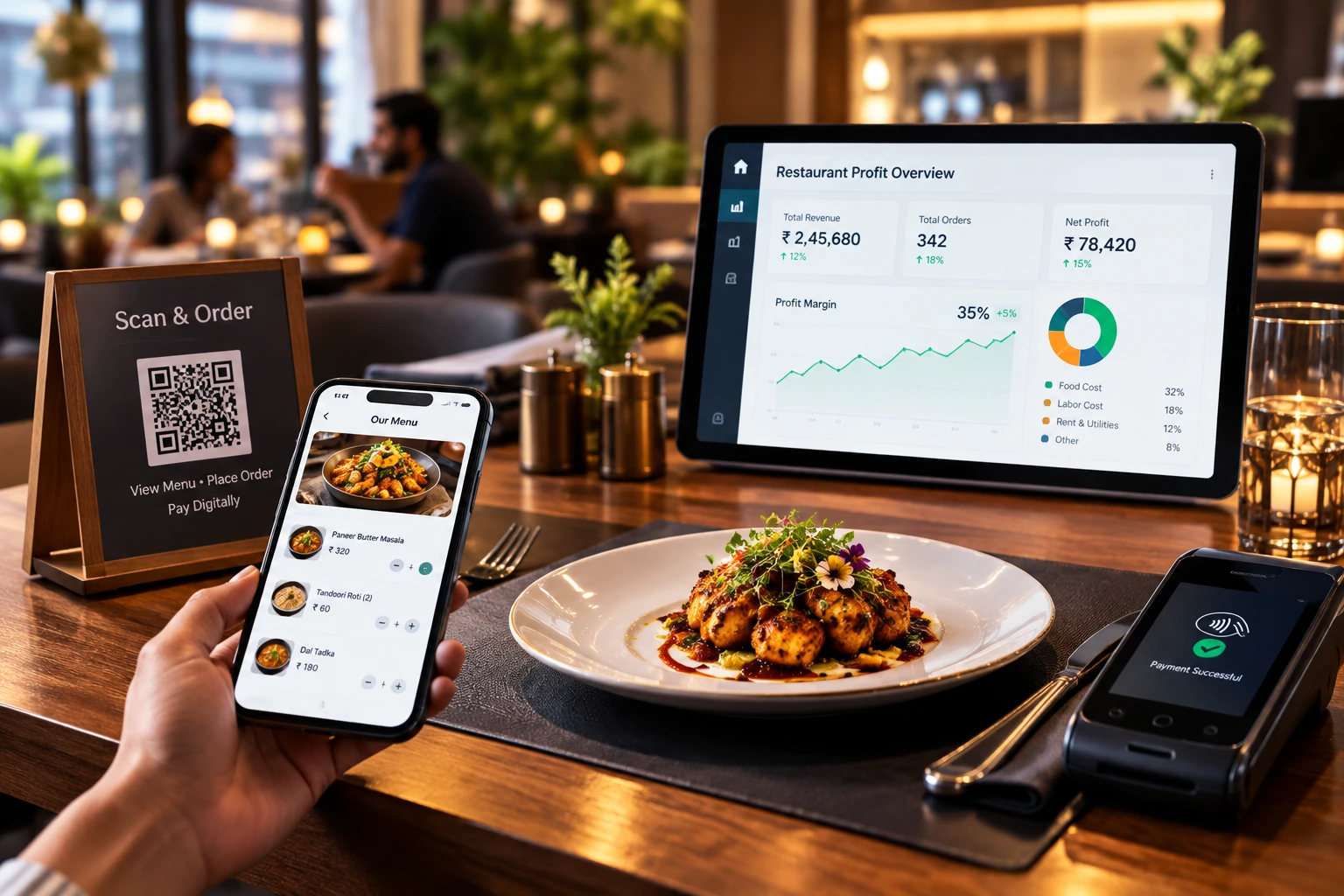
The post-pandemic restaurant industry in India has undergone a massive transformation. With food delivery aggregators charging up to 30% commission per order, smart restaurateurs are turning to QR code-based digital ordering systems to reclaim their customer base and protect profitability.
1. The True Cost of Aggregator Dependencies
Food aggregators were once seen as the golden ticket to new customers. However, high commission rates of 20% to 30% combined with hidden marketing charges often mean that restaurants make single-digit margins on delivery orders.
By implementing in-house QR code ordering for dine-in and direct pickup, Indian restaurants keep 100% of their revenue while building a direct line of communication with their patrons.
A restaurant doing ₹10 Lakhs monthly delivery volume can save over ₹2.5 Lakhs every single month simply by diverting 40% of orders to direct QR ordering channels.
2. Higher Average Ticket Sizes with Visual Menus
Traditional paper menus are static, text-heavy, and rarely updated. In contrast, digital QR menus showcase high-resolution photos, dynamic daily specials, and smart upsell recommendations.
Data from over 500+ Indian restaurants using Sattkar indicates that visual prompts for addons (like cheese burst, extra toppings, beverages, and desserts) increase average order value (AOV) by 18% to 24%.
- High-res photography activates appetite cues
- Automated addon prompts (combo deals, beverage pairings)
- Instant price adjustments based on seasonal ingredients
- Real-time item availability toggles to eliminate ordering out-of-stock dishes
3. Faster Table Turnover and Leaner Staffing
Peak lunch and dinner rushes often suffer from staff bottlenecks. Waiters running back and forth with menus, order pads, and credit card machines can add 15 minutes of dead time to every dining cycle.
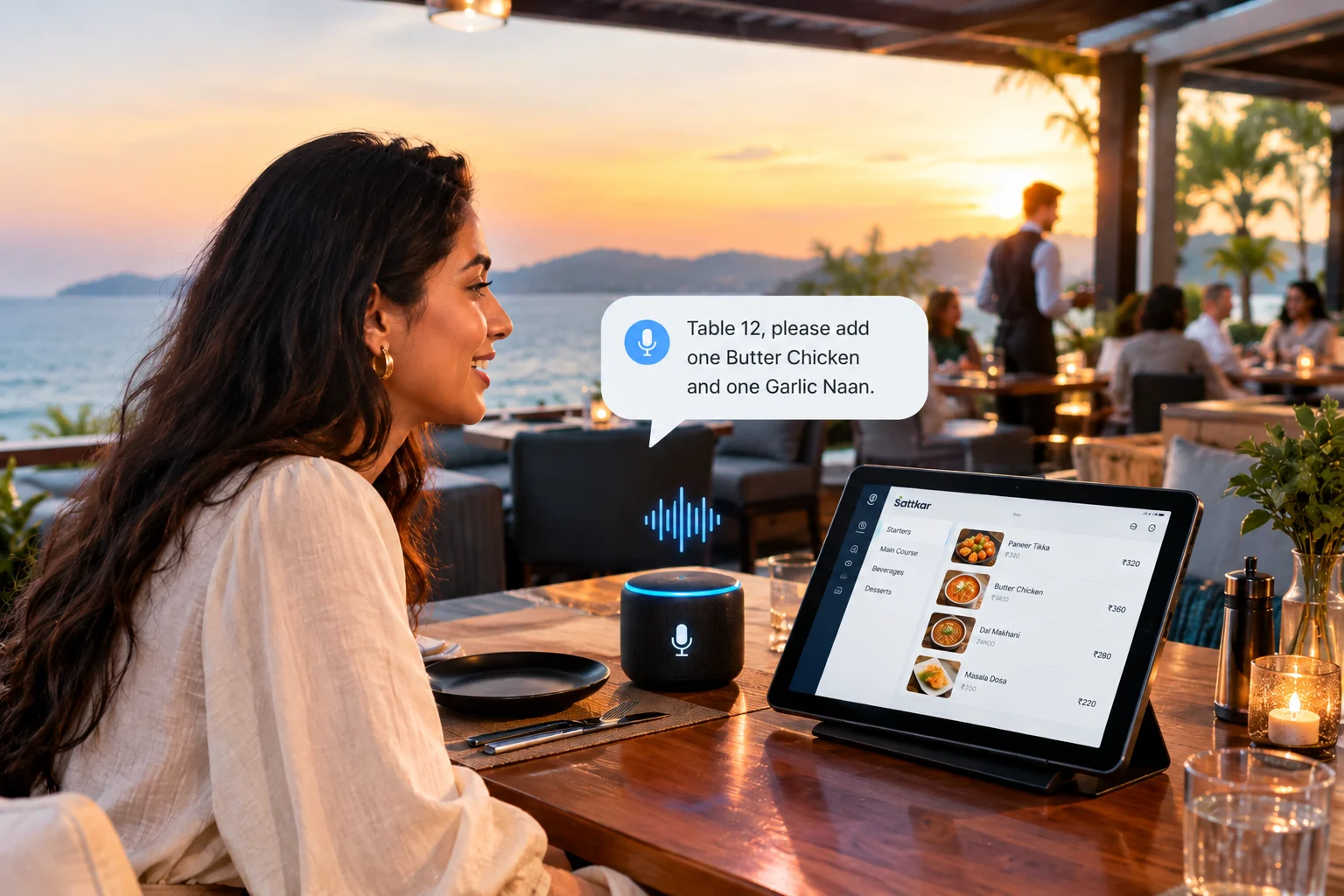
With QR code ordering, guests browse the digital menu and place their KOT (Kitchen Order Ticket) within minutes of sitting down. Food arrives faster, bills are paid seamlessly via UPI, and table turnover increases by up to 35%.
The bottom line
QR code ordering is no longer a temporary novelty — it is the bedrock of modern restaurant operations in India. By eliminating middleman commissions, speeding up kitchen workflows, and increasing average spend, it provides the competitive edge that independent eateries and multi-chain brands need in 2026.