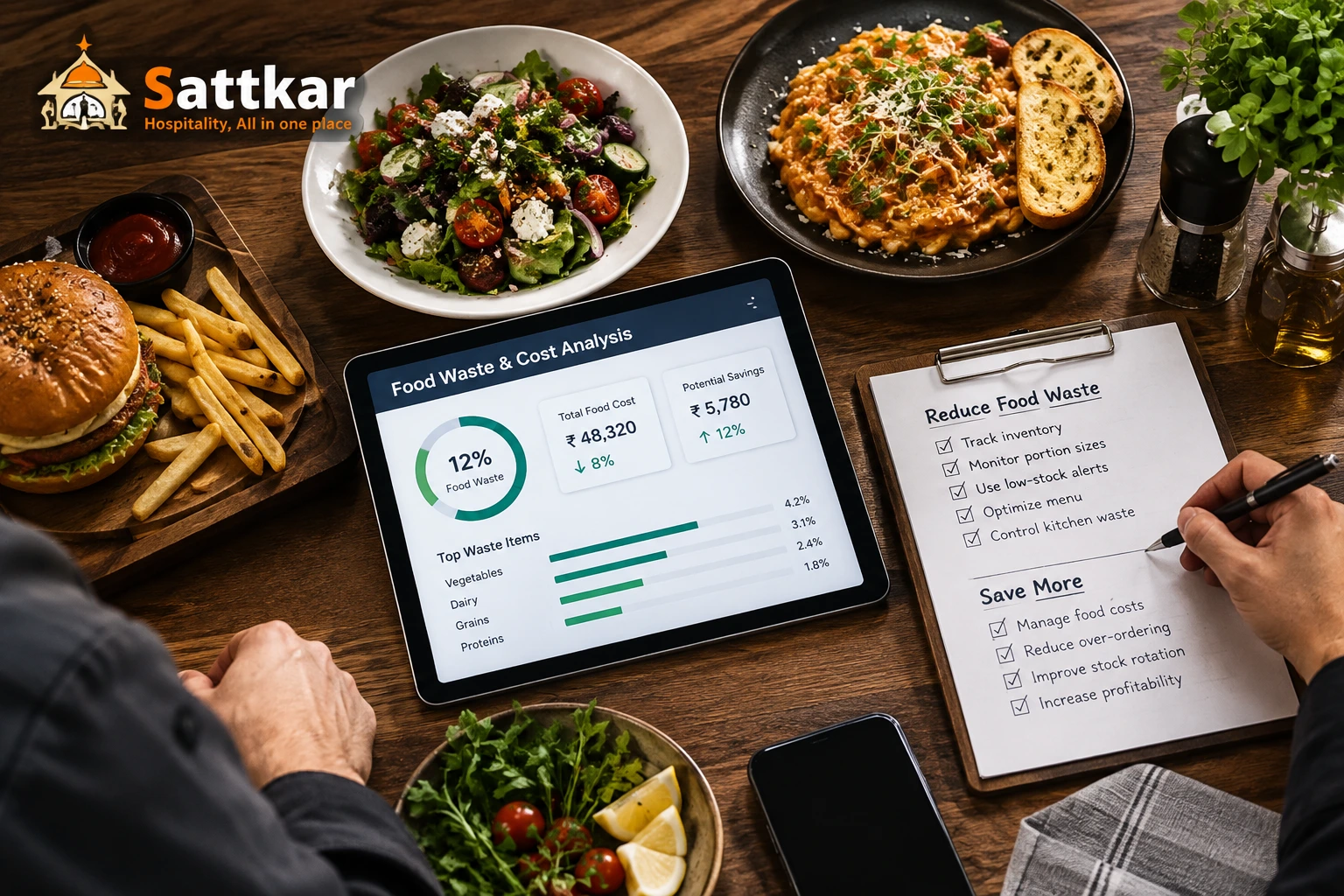
Food wastage and inventory shrinkage are the silent killers of restaurant profitability. A commercial kitchen without real-time ingredient tracking typically loses 8% to 15% of its gross revenue to pilferage and spoilage.
1. Implement Standardized Recipe Costing
Every dish on your menu must have an exact bill of materials (BOM). When a customer orders a Butter Chicken, your POS should automatically deduct 250g Chicken, 50g Butter, 100ml Cream, and spices from raw inventory.
This recipe-to-order mapping highlights discrepancies between theoretical stock consumption and actual physical audits.
2. Real-Time Low Stock & Expiry Alerts
Never let key ingredients run out during peak weekend dinner rushes. Automated minimum-threshold alerts notify kitchen managers to reorder dairy and fresh produce just in time, minimizing spoilage.
- First In, First Out (FIFO) inventory rotation
- Daily purchase order (PO) generation to pre-approved suppliers
- Digital Goods Receipt Notes (GRN) to check vendor invoices against deliveries
The bottom line
Real-time inventory management gives restaurant owners 100% visibility into their stock rooms, drastically reducing waste and boosting bottom-line profits.